Loading... Please wait...It is important that you feed tangs and other marine fish a good variety of live, frozen, and prepared formula foods with emphasis in vegetable and spirulina. It's best to feed small amounts several times a day.
Improves survival of fish fry and brine shrimp
Aqaculture fish are grown from tiny hatchery fry. This first stage is difficult and critical for success in aquaculture. Often, survival rates are very low. Spirulina added to the feed ration at 1 to 10% levels increases survival rates, allowing fish to reach market size sooner. It is the best food for tiny brine shrimp. Tiny zooplankton are another delicious food for larger fish, but growers have found them hard to cultivate. When fed spirulina, chances of successful cultivation improve greatly.
Spirulina has many health benefits for marine fish as it enhances the immune system to a higher level which helps fight off disease. Fish breeders have discovered five key benefits to using feeds with spirulina: 1) better growth rates, 2) improved quality and coloration, 3) better survival rates, 4) reduced medication requirements, 5) and reduced waste in the effluent.
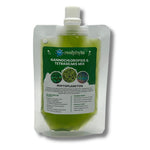
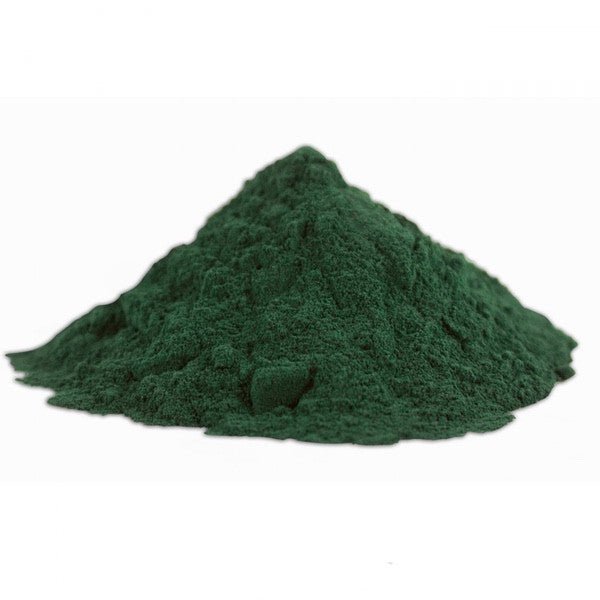
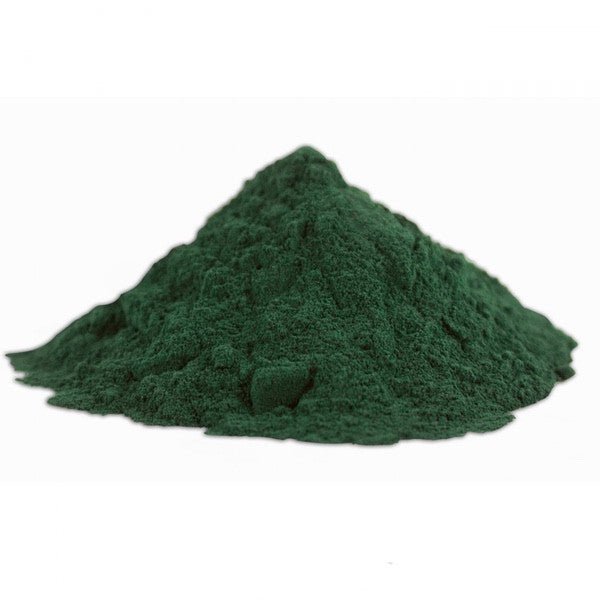
Our organic powdered spirulina is ideal to make your own food for your aquarium, please see the recipe below.
How to make fish food for sea aquarium?
Go to the sea food section at the supermarket, and pick up several shrimp, squid, sea scallops, mussel, clams, fish, and any other raw seafood that is available. The other main ingredient is Nori. You can also use other natural dried sea weeds that you should be able to find in the oriental grocery stores.
First throw the nori (and other seaweed) into the blender and shred into small pieces. Do this while its dry and it breaks up into nice small pieces. Then, remove most of it to leave a hand full in the blender and add half the seafood mix along with some water and blend it into a fine liquid paste. Then add back the rest of the nori, the remaining sea food mix, along with some spirulina flakes, spirulina powder, decapsualted brine shrimp, vitamin drops, a few drops of algal paste, some fresh phytpoplankton and rotifers, some yeast and chop it in the blender so as to give some larger chunkier pieces.
Place the mix into the freezer bags and spread it thin in the bag to allow breaking off pieces easily, and freeze. The finely blended stuff along with the other micro sized food will work fine to feed the filter feeders and corals, and the larger pieces along with the nori works well for the fish, and the other invertebrates such as star fish, and shrimp.
The exact proportion of each is not really all that important, you just try to make sure that there is enough variety to satisfy the wide range of life forms in the tank. We have recently experimented with adding broccoli, carrots and spinach to the mix. You could see the tangs eat the pieces of spinach, broccoli, and carrots. Some other ingredients that they have added to the food include fresh fish, brine shrimp, freeze dried plankton, dried blood worms, and other fish food. The basic idea was to create a one shot food recipe that will take care of the complete spectrum of life forms in the tanks.