Rotifer & Artemia Enrichment: Fuel, Enrich & Protect Your Larvae
Your rotifers are alive. Your brine shrimp are hatching at a good rate. Your larval survival in the first week is reasonable. But somewhere between day five and day ten the losses start to mount, the larvae that do make it look underdeveloped, and the ones that survive to weaning are smaller and slower than they should be. The live food is there. Something in it is not.
A rotifer or brine shrimp nauplius that has not been enriched is nutritionally thin. The gut contents of an unenriched rotifer are largely whatever was in the culture water, which in most cases is not enough EPA or DHA to support the neurological development, visual function, and growth that marine fish larvae require in their first days of feeding. The larvae are eating. They are not receiving what they need. And the gap between adequate live food and nutritionally complete live food is the difference between larvae that survive and larvae that thrive.
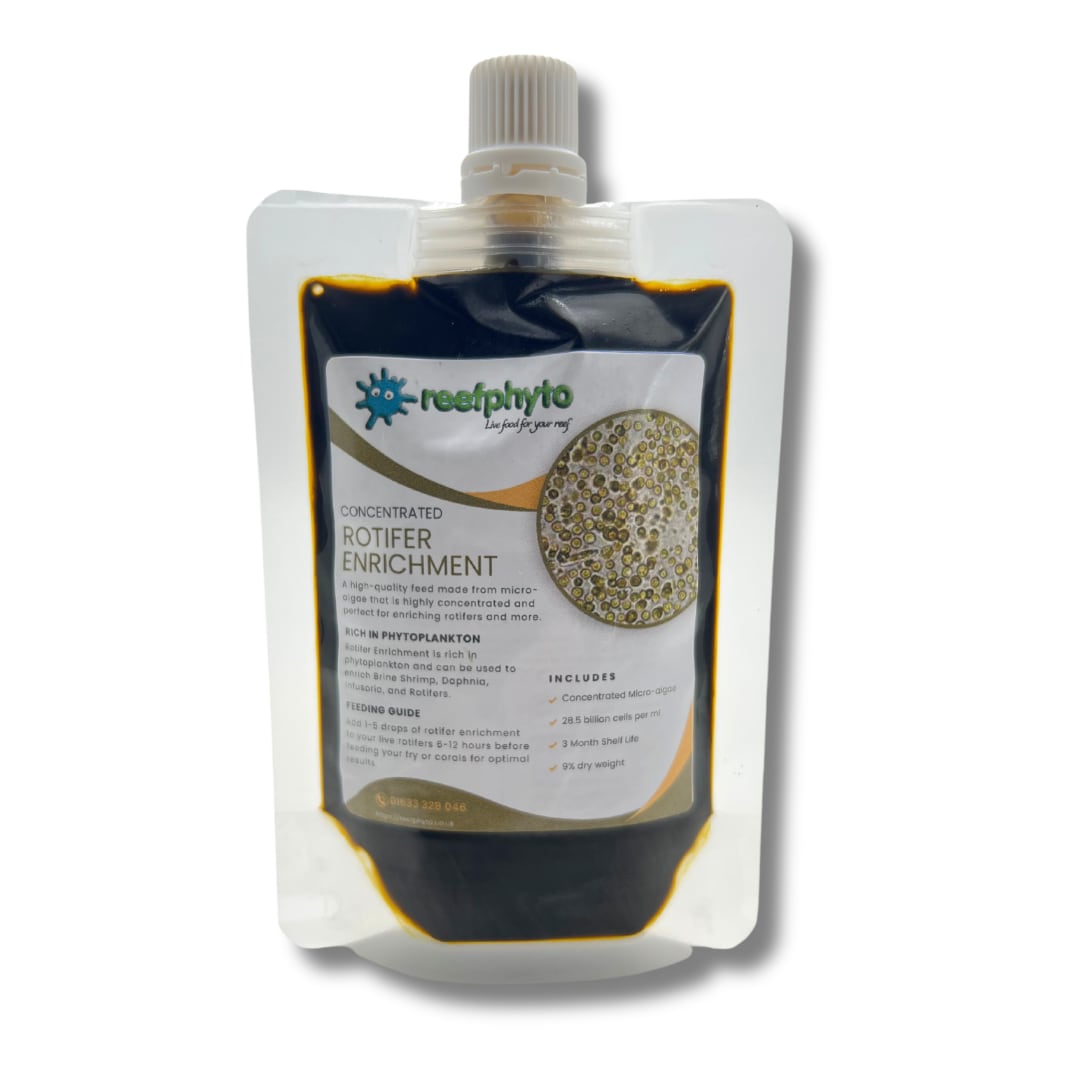
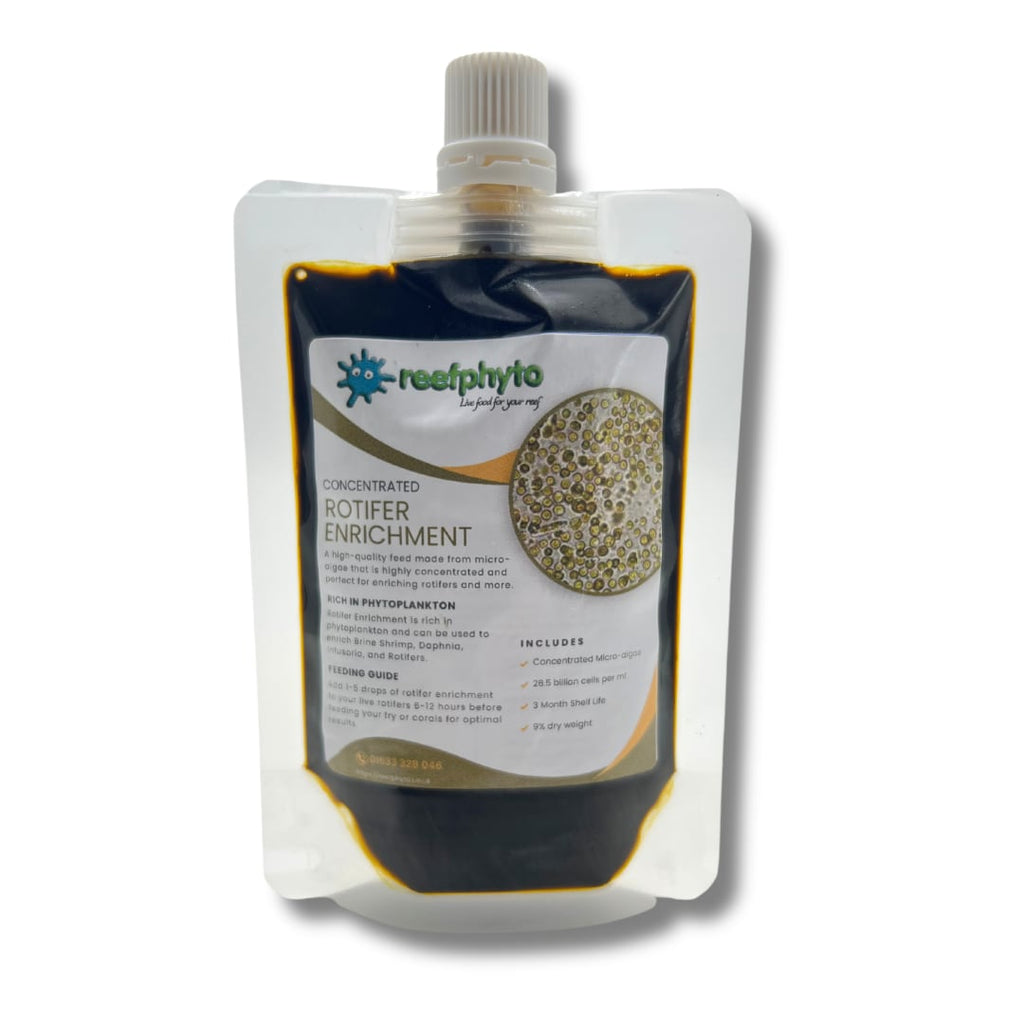
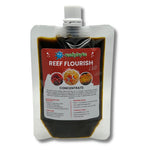
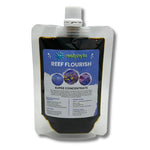
Reefphyto Rotifer and Artemia Enrichment is a concentrated two-species live microalgae blend of Nannochloropsis and Isochrysis, designed specifically for gut-loading rotifers and brine shrimp before they enter the larval rearing vessel. Add 1 to 5 drops directly to your rotifer or Artemia culture, allow 6 to 12 hours for maximum nutrient uptake, then harvest and feed. The Nannochloropsis delivers EPA for immune function and growth. The Isochrysis delivers DHA, the omega-3 fatty acid most critical for neural and visual development in marine larvae. Together they convert a nutritionally marginal live food into a precision delivery system for the fatty acids marine larvae cannot synthesise themselves. Available in 30ml, 50ml, and 100ml, store refrigerated and use within three months of delivery.
The difference enrichment makes is not gradual. Breeders who begin enriching consistently report a visible step change within one or two hatch cycles. Larval losses in the first ten days reduce. Surviving larvae are more active, more uniform in development, and reach weaning size faster. The rotifers and nauplii are the same. What they are carrying when they arrive in the larval tank is not.
Reefphyto has been supplying enrichment products to marine fish breeders and reef keepers across the UK since 2008. If you are trying to establish a larval rearing programme and want guidance on enrichment timing, dose rates, or how to build a complete first-feed system around rotifers and brine shrimp, contact us directly. Darren has worked with marine fish breeding programmes at every scale and responds personally.
The live food is only as good as what is in it when it arrives.
Why Unenriched Live Food Falls Short
The concept of enrichment is one of the most important and most commonly overlooked in marine fish breeding. A rotifer or brine shrimp nauplius delivered to a larval rearing tank is not inherently nutritious. Its nutritional value at the moment of consumption is almost entirely determined by what it has been fed in the hours before feeding. An unfed or poorly fed live food item is largely water and protein shell. An enriched one is a concentrated package of the exact fatty acids marine larvae need most.
This matters because marine fish larvae cannot synthesise EPA and DHA from precursor fatty acids the way some other organisms can. They depend entirely on dietary input for these essential omega-3s in their early development. EPA supports immune function, inflammatory response regulation, and cellular membrane integrity. DHA is the primary structural fatty acid in neural tissue and the retina, and its availability in the larval diet directly affects the development of the visual and neurological systems that determine whether a larva becomes a functional juvenile or fails to develop normally.
In the absence of enrichment, larvae fed unenriched rotifers and nauplii receive insufficient DHA to support normal neural and visual development. The result is not necessarily immediate death, though losses are higher. It is subtle developmental failure: larvae that survive but develop slowly, that fail to track and hunt prey efficiently, that are smaller and weaker at weaning than they should be. The live food was present. What it was carrying was not.
What Reefphyto Rotifer and Artemia Enrichment Contains
The enrichment is a concentrated live microalgae blend of two species chosen specifically for their complementary fatty acid profiles and their established roles in marine aquaculture enrichment programmes.
Nannochloropsis provides EPA at high concentration. At 1 to 5 microns, the cells are small enough to be consumed efficiently by rotifers and pass through the rotifer gut wall to enrich the lipid content of the rotifer's own tissue and eggs. The EPA in enriched rotifers and nauplii supports larval immune development, membrane function, and the inflammatory responses that determine survival under the stresses of early life in a rearing vessel.
Isochrysis galbana provides DHA, the omega-3 fatty acid that is most critical for neural and visual development in marine fish larvae. Isochrysis is the most widely used DHA source in commercial marine fish hatchery enrichment programmes for exactly this reason, and its inclusion in this blend provides the neural development support that Nannochloropsis alone cannot deliver. Together, the two species provide the EPA to DHA ratio that most closely matches the fatty acid profiles found in marine zooplankton in the wild.
How to Enrich Rotifers and Artemia
The enrichment process is simple and requires no specialist equipment beyond the rotifer or Artemia culture vessel you are already running.
For rotifers, add 1 to 5 drops of enrichment directly to the culture vessel or a separate enrichment vessel containing the rotifers you intend to harvest. The dose depends on culture density. A pale, thin culture requires a smaller dose to achieve the same cell availability per rotifer as a denser culture. Allow 6 to 12 hours for the rotifers to consume and assimilate the enrichment microalgae before harvesting and feeding to larvae. Enriching for the full 12 hours produces rotifers with higher DHA loading than a shorter enrichment period, which is particularly important for species with high neural development demands such as clownfish, dottybacks, and most marine wrasse larvae.
For brine shrimp nauplii, the same process applies. Add enrichment to a vessel containing freshly hatched nauplii and allow 6 to 12 hours before harvesting and feeding. Newly hatched nauplii have an open gut that absorbs the enrichment microalgae rapidly. By the end of the enrichment period their gut contents are visibly coloured by the Nannochloropsis and Isochrysis cells, a reliable visual indicator that gut-loading has occurred effectively.
Regular Enrichment Versus Pre-Feed Enrichment
For best results, rotifers and Artemia should be maintained on enrichment regularly rather than only in the hours before feeding. This is an important distinction in programme design.
Pre-feed enrichment, enriching for 6 to 12 hours immediately before each feeding, is the minimum effective approach. It ensures the live food delivered to larvae carries a useful EPA and DHA load at the moment of consumption. For breeders with small-scale or intermittent larval rearing programmes, this approach is practical and produces good results.
Regular maintenance enrichment, keeping a low concentration of enrichment in the rotifer culture at all times, produces rotifers with consistently higher fatty acid loading because the organisms are assimilating enrichment continuously rather than only in the pre-feed window. It also improves rotifer culture stability, egg quality, and the health and activity level of the rotifers themselves. For breeders running continuous larval programmes or large-scale operations, regular maintenance enrichment produces meaningfully better outcomes over time than pre-feed enrichment alone.
Who This Product Is For
Rotifer and Artemia enrichment is relevant to any keeper or breeder who is using live rotifers or brine shrimp nauplii as a first-feed for marine larvae. If you are setting up a rotifer culture programme from scratch, our Rotifer Culture Kit provides everything you need alongside this enrichment blend.
Marine fish breeders raising clownfish, dottybacks, gobies, or any broadcast-spawning species that produces larvae requiring live first-feed will see the most direct benefit. The larval period for most marine fish species is between five and twenty days depending on species, and the survival and quality of larvae through this window is the primary determinant of breeding programme success. Enrichment is the single most impactful nutritional intervention available in this window.
Seahorse and pipefish keepers raising juveniles use enriched nauplii as a stepping stone between newly hatched fry and the copepod diet that juveniles transition onto as they grow. Enriched nauplii provide significantly better developmental support for juvenile seahorses than unenriched nauplii during this transition period.
NPS coral keepers who target-feed non-photosynthetic corals with enriched rotifers benefit from the improved bioavailability of the fatty acid content delivered directly to coral polyps via the enriched rotifer.
Frequently Asked Questions
How long should I enrich for?
Six to twelve hours is the recommended enrichment window. Six hours produces a useful fatty acid load suitable for most applications. Twelve hours produces the highest DHA loading and is recommended for species with high neural development demands or for breeders who want to maximise larval survival in the first ten days.
Can I over-enrich?
At the recommended dose of 1 to 5 drops per culture, over-enrichment is unlikely under normal conditions. Adding too much enrichment to a rotifer culture can increase the organic load in the enrichment vessel and reduce water quality, which stresses the rotifers and reduces their activity and feeding response. If the culture water becomes very cloudy or the rotifers show reduced activity after adding enrichment, reduce the dose slightly.
Can I use this to enrich copepods?
Nannochloropsis and Isochrysis are both consumed by copepods and will improve the fatty acid profile of copepod cultures when added to the culture vessel. However, the primary application of this product is rotifer and Artemia enrichment. For copepod culture nutrition, our Copepod Feed is the purpose-built four-species blend designed specifically for copepod nutrition.
Does this replace the need for regular phytoplankton culture feeding?
No. This is an enrichment product for use in the hours before feeding, not a replacement for the ongoing feeding that sustains rotifer and copepod cultures day to day. For daily rotifer culture feeding, use Rotifer Feed Concentrate. For copepod cultures, use Copepod Feed. Use this enrichment product in addition to the regular culture feed, in the pre-feed window, for maximum nutritional impact.
How long does the product remain effective?
Store refrigerated and use within three months of delivery. As with all live microalgae products, cell viability is highest at dispatch and declines gradually over time. Using the product within the freshness window ensures the enrichment cells are alive and biologically active when consumed by rotifers and nauplii, which is important because dead or inactive cells enrich less effectively than live ones.
Reefphyto: Live Marine Nutrition from Wales Since 2008
Reefphyto has been supplying live phytoplankton, enrichment products, rotifers, copepods, and brine shrimp to marine fish breeders, reef keepers, and public aquariums across the UK since 2008. If you are building a larval rearing programme and want guidance on enrichment timing, dose rates, or how to construct a complete first-feed nutrition system, contact us directly. Darren has worked with marine fish breeding programmes at hobbyist and commercial scale and responds personally to every enquiry.

 Cultured in Wales, shipped live.