Live Zooplankton
You've added a new coral and watched it stay closed for weeks. Your SPS aren't extending the way they should. Your fish are present and your water is clean, but the tank feels static, like something essential is missing from the equation.
The problem is that a reef isn't just fish and coral. It's an entire food web, and most of that web is invisible. Without live zooplankton moving through the water column, corals can't feed the way they evolved to, filter feeders slowly withdraw, and the microfauna community that underpins a healthy reef never gets the chance to establish. The tank looks maintained. It doesn't look alive.
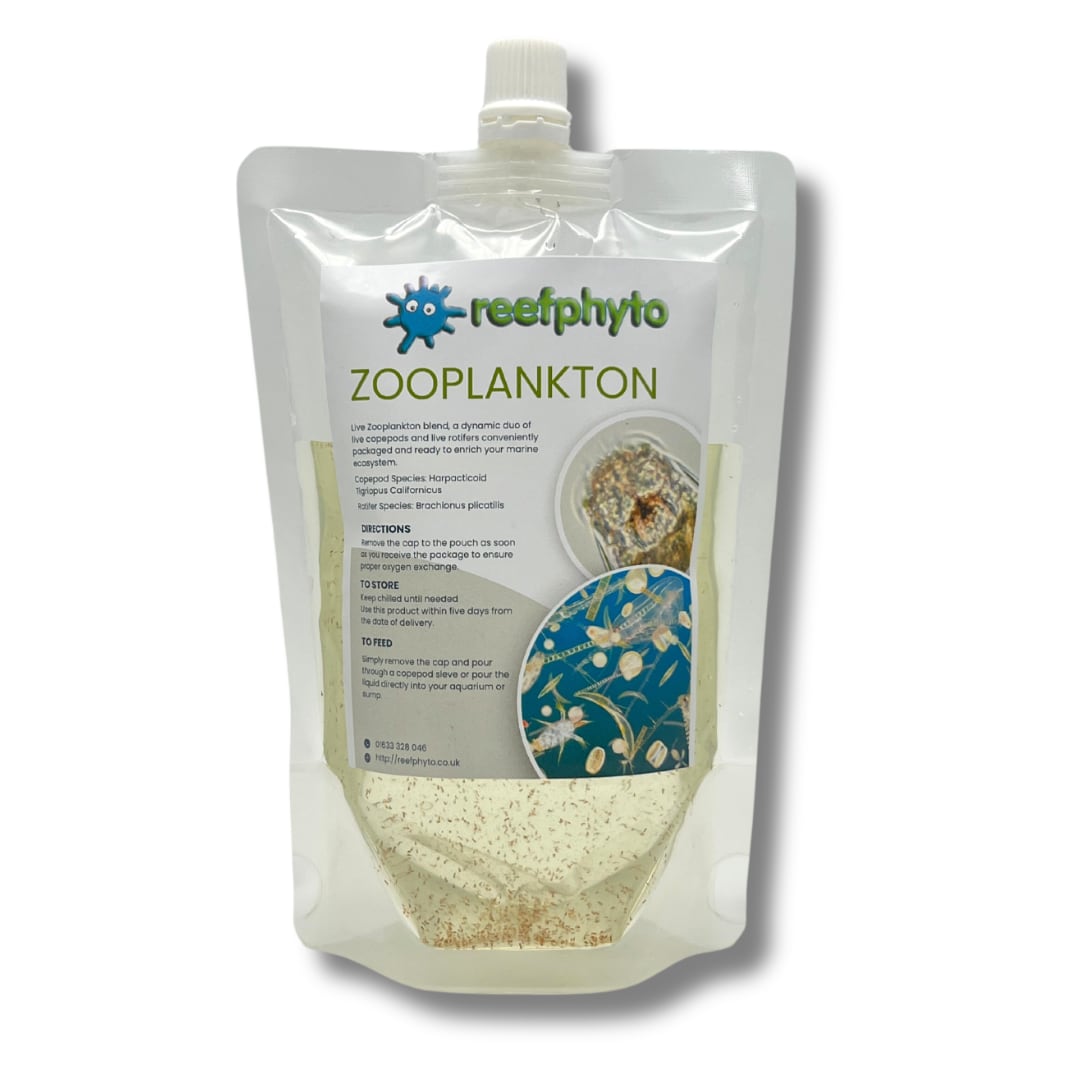
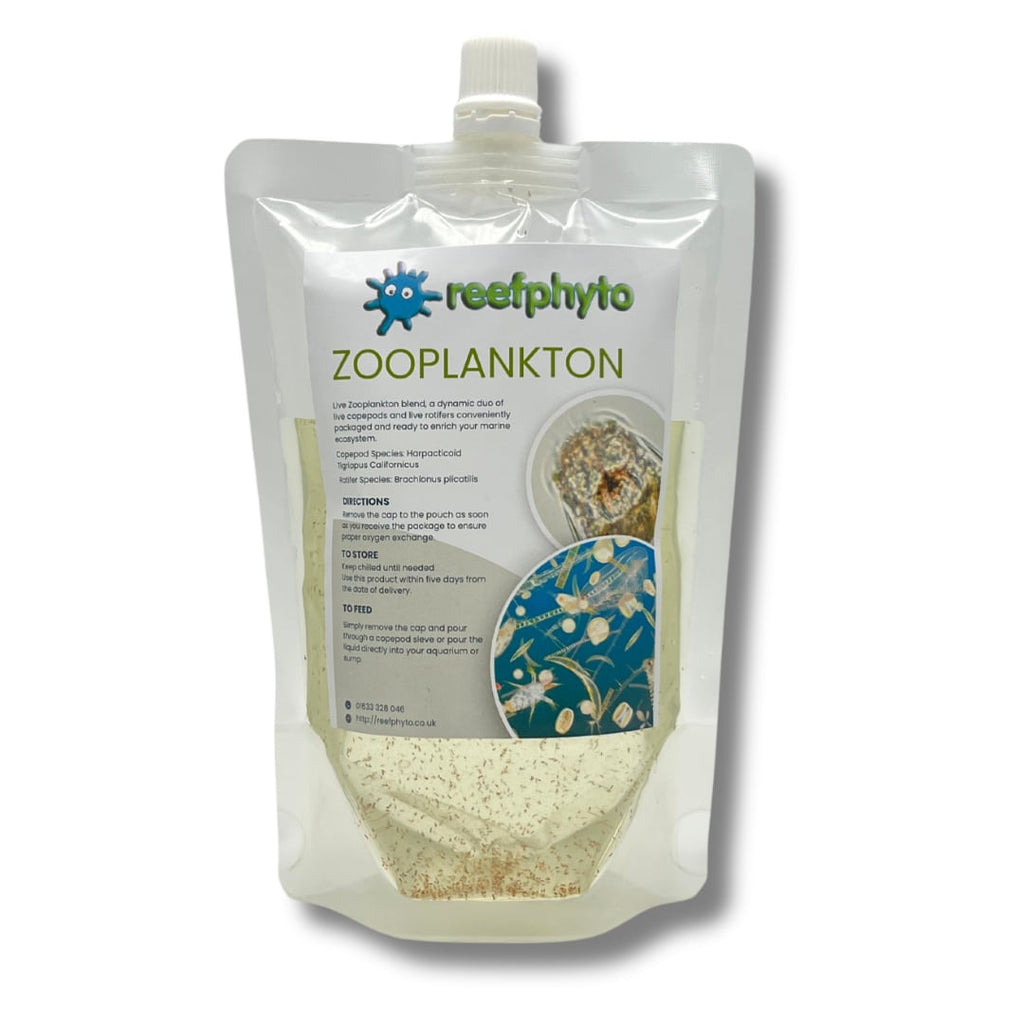
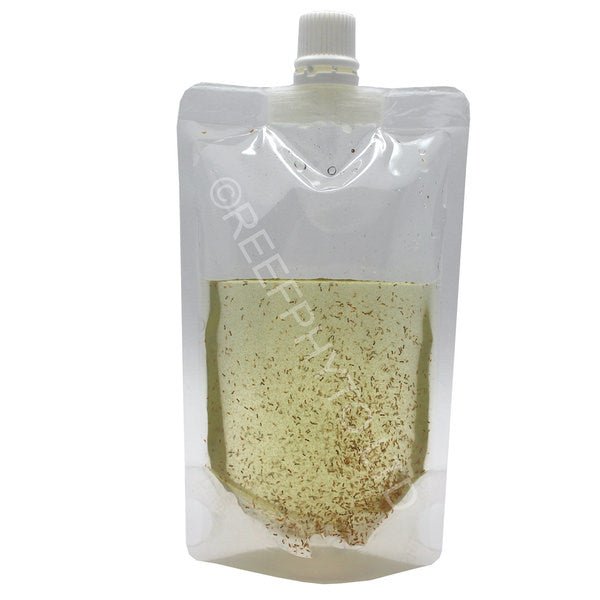
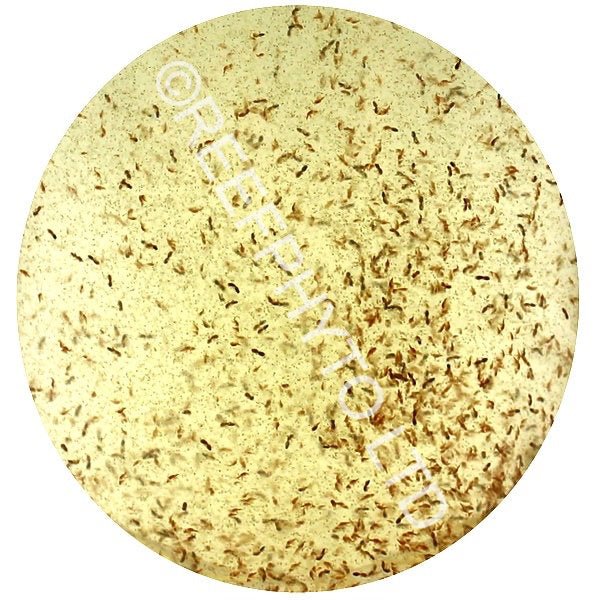
Live Zooplankton from Reefphyto combines Tigriopus californicus copepods and Brachionus plicatilis rotifers in a single, balanced culture covering a particle size range of 90 to 400 microns. Together they feed every level of your reef's food web at once, from filter feeders and coral polyps through to fish larvae and the wider microfauna that a thriving reef depends on.
When a complete live zooplankton culture is introduced, the tank responds in a way that no frozen or dried food produces. Corals begin to extend and actively feed. The water column comes alive with movement. Animals that seemed indifferent start behaving with the instinct and energy they were built to express.
Reefphyto has been culturing live marine foods from our specialist facility in Wales since 2008. Every batch is prepared fresh on the day of dispatch, and Darren is available personally if you need guidance on volumes, frequency, or which species in your tank will benefit most.
Order today and introduce the missing layer your reef has been waiting for.
If you want to introduce both copepods and rotifers in a single addition without managing separate cultures, live zooplankton is the right decision.
Live Zooplankton UK: Copepods and Rotifers for a Complete Reef Food Web
A reef tank without live zooplankton is missing the layer that holds everything together. Corals, filter feeders, fish larvae, and the microfauna community that underpins a healthy reef all depend on a continuous supply of small, live, moving prey in the water column. Reefphyto's Live Zooplankton combines Tigriopus californicus copepods and Brachionus plicatilis rotifers in a single freshly cultured blend, dispatched from our specialist facility in Wales to reef keepers across the UK.
What Is Live Zooplankton?
Zooplankton is the collective term for the small, free-swimming animals that form the foundation of the marine food web. In the ocean, zooplankton is not a single organism. It is a community of copepods, rotifers, amphipods, larvae, and countless other microscopic animals that collectively feed almost every creature above them in the food chain.
In a reef aquarium, recreating that community is one of the most impactful things a keeper can do. Most tanks are fed at the top of the food chain, fish and large coral, while the base of the food web is left entirely unfed. Live zooplankton addresses this gap directly, introducing the living organisms that corals, filter feeders, and microfauna depend on at every level of the system.
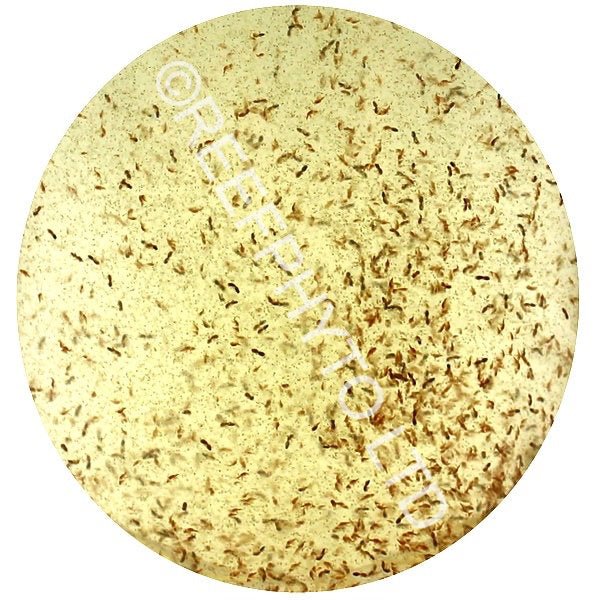
Reefphyto's Live Zooplankton contains two of the most important and complementary species for reef aquarium use. Tigriopus californicus copepods are robust, highly active crustaceans that provide live prey for fish and colonise refugiums to create a self-sustaining population. Brachionus plicatilis rotifers, measuring 90 to 360 microns, provide smaller particle nutrition accessible to coral polyps, fish larvae, and filter feeders that cannot capture larger prey.
Together they cover a particle size range of 90 to 400 microns, feeding every level of your reef's food web in a single addition.
Why Your Reef Tank Needs Live Zooplankton
Corals Are Hunters, Not Just Photosynthesisers
This is one of the most commonly misunderstood aspects of reef keeping. While zooxanthellae provide corals with energy through photosynthesis, this accounts for only part of their nutritional requirements. Corals are also active predators, extending their polyps to capture zooplankton from the water column. Without live prey moving through the tank, this feeding behaviour is suppressed, and corals miss out on the proteins, lipids, and essential fatty acids they need for calcification, tissue growth, and resilience under stress.
SPS corals in particular show a marked improvement in polyp extension, growth rate, and colour intensity when live zooplankton is introduced regularly. The movement of live prey in the water column is the trigger. It is something that frozen or dried food, regardless of its nutritional content on paper, simply cannot replicate.
Filter Feeders Depend on Live Particles
Feather duster worms, fan corals, bivalves, tunicates, sponges, and many other reef invertebrates are filter feeders. They are adapted to extract living particles from the water as it passes through their feeding structures. Static or dead particles behave differently in the water column and are far less effectively captured by these animals. Regular addition of live zooplankton gives filter feeders the nutritional input they need to remain healthy, extended, and actively feeding.
Building a Self-Sustaining Reef Microfauna
A reef tank with a thriving microfauna community behaves fundamentally differently to one without. Copepods graze on microalgae and detritus, helping to keep nuisance algae in check and organic waste under control. As they reproduce they become an ongoing food source for the wider tank, reducing the dependence on hand-feeding and creating the kind of ecological balance that characterises a genuinely healthy reef system. Introducing a combined zooplankton culture accelerates the establishment of this community far more effectively than adding copepods or rotifers separately.
Tigriopus californicus: The Copepod in Our Live Zooplankton Blend
Tigriopus californicus is a harpacticoid copepod naturally found in supralittoral tide pools along the Pacific coast. This background makes it exceptionally well suited to aquarium use. It is one of the most robust and adaptable copepod species available, tolerating fluctuations in water parameters that would stress many other organisms. Once introduced to a refugium, a healthy Tigriopus population can become self-sustaining, providing a continuous live food source for the tank above.
For demanding fish species like mandarin dragonets, scooter blennies, leopard wrasses, anthias, and seahorses, a well-established refugium copepod population is not a bonus, it is a necessity. These fish are adapted to hunt live prey continuously throughout the day, and without a reliable live food source in the system, they slowly decline regardless of how well everything else is managed.
Tigriopus californicus copepods are packed with EPA, DHA, and essential amino acids. Their active, highly visible swimming behaviour triggers natural hunting and feeding instincts in fish that would otherwise be difficult to sustain in captivity.
Brachionus plicatilis: The Rotifer in Our Live Zooplankton Blend
Brachionus plicatilis rotifers at 90 to 360 microns fill the smaller end of the particle size range that the copepods cannot cover. Their slow, rotating swimming motion makes them accessible and stimulating prey for coral polyps, newly hatched fish larvae, and juvenile animals that are not yet capable of pursuing faster, larger copepods.
In the context of the Live Zooplankton blend, rotifers serve two roles. They provide immediate live nutrition to corals and filter feeders, and they contribute to the living microfauna community being established in the tank. For reef keepers who are not specifically focused on fish breeding but want broad-spectrum live nutrition covering every level of their system, having rotifers included in the blend removes the need to source and manage two separate cultures.
How to Use Live Zooplankton in Your Reef Tank
Add live zooplankton directly to your display tank or refugium on the day of delivery. For best results, reduce flow from mechanical filtration and turn off the protein skimmer for 30 to 60 minutes after dosing to allow the organisms to disperse naturally before being removed from the water column.
For tanks with a refugium, add a portion directly to the refugium to encourage copepod establishment and population growth. The balance can be added to the display tank for immediate feeding.
For corals and filter feeders, evening dosing is most effective as coral polyp extension and feeding activity is naturally higher after the lights dim.
To sustain your copepod population long term, supplement with our 5 Species Live Phytoplankton Blend. Phytoplankton is the primary food source for copepods and rotifers, and a regular phytoplankton addition ensures your zooplankton community continues to reproduce and thrive between top-ups.
How Often Should You Add Live Zooplankton?
For tanks in the early stages of establishing a live food system, weekly additions for the first four to six weeks will build your microfauna community to a meaningful population level. Once established, monthly or bi-monthly top-ups are typically sufficient to maintain numbers, though tanks with high copepod predation from mandarin dragonets, wrasses, or anthias will benefit from more frequent restocking.
The Live Zooplankton blend is available as a subscription at a discount, making regular restocking straightforward and cost-effective.
Frequently Asked Questions About Live Zooplankton
Is live zooplankton safe to add to an established reef tank?
Yes. Live zooplankton is a natural component of any marine ecosystem and is entirely safe to introduce to a healthy reef system. The organisms in our blend will not introduce pests or disease and will be readily consumed by fish, corals, and filter feeders. Any that are not immediately consumed will begin grazing on microalgae and detritus, contributing to the balance of the tank.
Can I use live zooplankton to feed marine fish larvae?
Yes, particularly the Brachionus plicatilis rotifers included in the blend. For dedicated fish breeding projects where precise control of rotifer density is needed, our standalone live rotifers are a better choice as they allow more accurate dosing. For general reef tanks where larvae may be present alongside adult fish, the zooplankton blend provides appropriate nutrition across a wide size range.
How does live zooplankton differ from frozen copepods?
The key difference is movement. Live zooplankton swims actively through the water column, triggering the feeding responses in fish, corals, and filter feeders that are hardwired to respond to moving prey. Frozen copepods provide nutritional value but lack the movement stimulus that makes live food so effective, particularly for obligate live feeders like mandarin dragonets and for coral polyp feeding responses.
Do I need a refugium to use live zooplankton?
No. Live zooplankton can be added directly to any reef tank and will provide immediate nutritional benefit regardless of whether a refugium is present. However, a refugium significantly improves the long-term outcome by providing a protected space where copepods can establish a self-sustaining population away from predation pressure.
How are live zooplankton packaged for shipping?
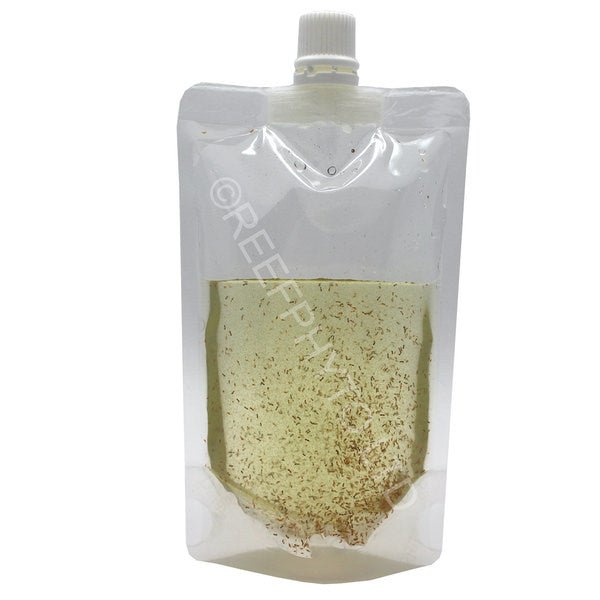
Live zooplankton is dispatched fresh in sealed, oxygenated packaging prepared on your dispatch day. The culture is shipped concentrated (with reduced water volume) to maximise oxygen availability during transit and ensure viability. The full copepod and rotifer count is present. Simply add to your tank or refugium with your own saltwater.
Complete Your Live Food System
Live zooplankton works best as part of a broader live nutrition approach. Our 5 Species Live Phytoplankton Blend feeds and sustains the copepods and rotifers in your tank and provides direct nutrition for corals and filter feeders. Our standalone Live Copepods allow you to add a larger, more targeted volume of Tigriopus californicus for refugium stocking or for tanks with heavy copepod predation. Our standalone Live Rotifers are available for dedicated marine fish breeding projects requiring precise first-feed dosing.


 Cultured in Wales, shipped live.